
The History of Decoupage Furniture: From Royal Craft to Modern Design

Most people assume decoupage is simply cutting out paper and sticking it onto a surface. It is often presented that way online, so it is an easy conclusion to come to. In reality, the history of decoupage furniture is far more layered than that. The technique has existed in different forms for centuries and, at various points in time, has been used to decorate high-end pieces intended for wealthy homes.
Understanding where it comes from changes how you see it. It stops feeling like a quick decorative trick and starts to make more sense as a form of furniture art that has evolved over time.

The Origins of Decoupage Furniture (Long Before It Had a Name)
The earliest versions of what we now recognise as decoupage can be traced back to China. Artisans used layers of paper and lacquer to create detailed decorative finishes on furniture and objects. These pieces were not made quickly. They required time, patience, and a high level of skill to build up the layers and achieve a smooth, durable surface.
When these items made their way to Europe, they were admired but expensive to import. European makers began experimenting with their own ways to recreate a similar look, using cut imagery and finishes to imitate the depth and detail of traditional lacquer work. From the beginning, this was about craftsmanship and creativity rather than convenience.


How Decoupage Furniture Became Popular in Europe
By the 17th and 18th centuries, the technique had become established across Europe. Venetian cabinetmakers were among the first to adopt it, using printed images to decorate furniture in a way that echoed more expensive imported pieces. In France, the term découper, meaning “to cut out,” became associated with the process, and the name has remained ever since.

At this stage, decoupage was not seen as a lesser alternative. It was valued for its decorative potential and used to create detailed, expressive furniture. Pieces were often intricate and time-consuming, and they were appreciated for that level of work.
How Decoupage Furniture Became Popular in Europe

The perception of decoupage began to shift during the Victorian era. Advances in printing made decorative papers and images far more accessible, and the technique became something that could be done at home rather than only by trained makers. It was used in scrapbooks, small objects, and more casual furniture projects.

As more people began using it in a hobby context, it gradually became associated with craft rather than craftsmanship. That shift in perception has carried through to today, even though the technique itself has not lost any of its potential. It simply started being used in a wider range of ways, from very basic applications to highly skilled work.
Modern Decoupage Furniture vs Decorative Craft
Today, decoupage sits across a wide spectrum. On one end, there are quick decorative applications that focus purely on surface appearance. On the other, there are carefully designed furniture pieces where the process is only one part of a much larger approach.
With modern decoupage furniture, the difference often comes down to preparation, design, and finish. Proper surface preparation affects how well the piece lasts. Thoughtful composition determines whether the final result feels intentional or busy. The finishing process impacts both durability and how cohesive everything looks once complete.
For us, it is not about simply applying a material. It is about using that technique as part of a broader design process to create something that feels considered and built to function as real furniture.
Why the History of Decoupage Furniture Still Matters Today

Looking at the history of decoupage furniture helps explain why there is such a wide range in how it is perceived now. It has moved between being a high-end decorative art and an accessible hobby, and that dual identity still exists.

In a more modern context, it also aligns naturally with ideas around upcycling and sustainability. Instead of discarding furniture, the process allows it to be reworked into something entirely different. That transformation is part of what makes it appealing, particularly when each piece is one of a kind.
Understanding that background makes it easier to see why some pieces are purely decorative, while others are designed with longevity, usability, and detail in mind.
From Past to Present: How We Use Decoupage Today
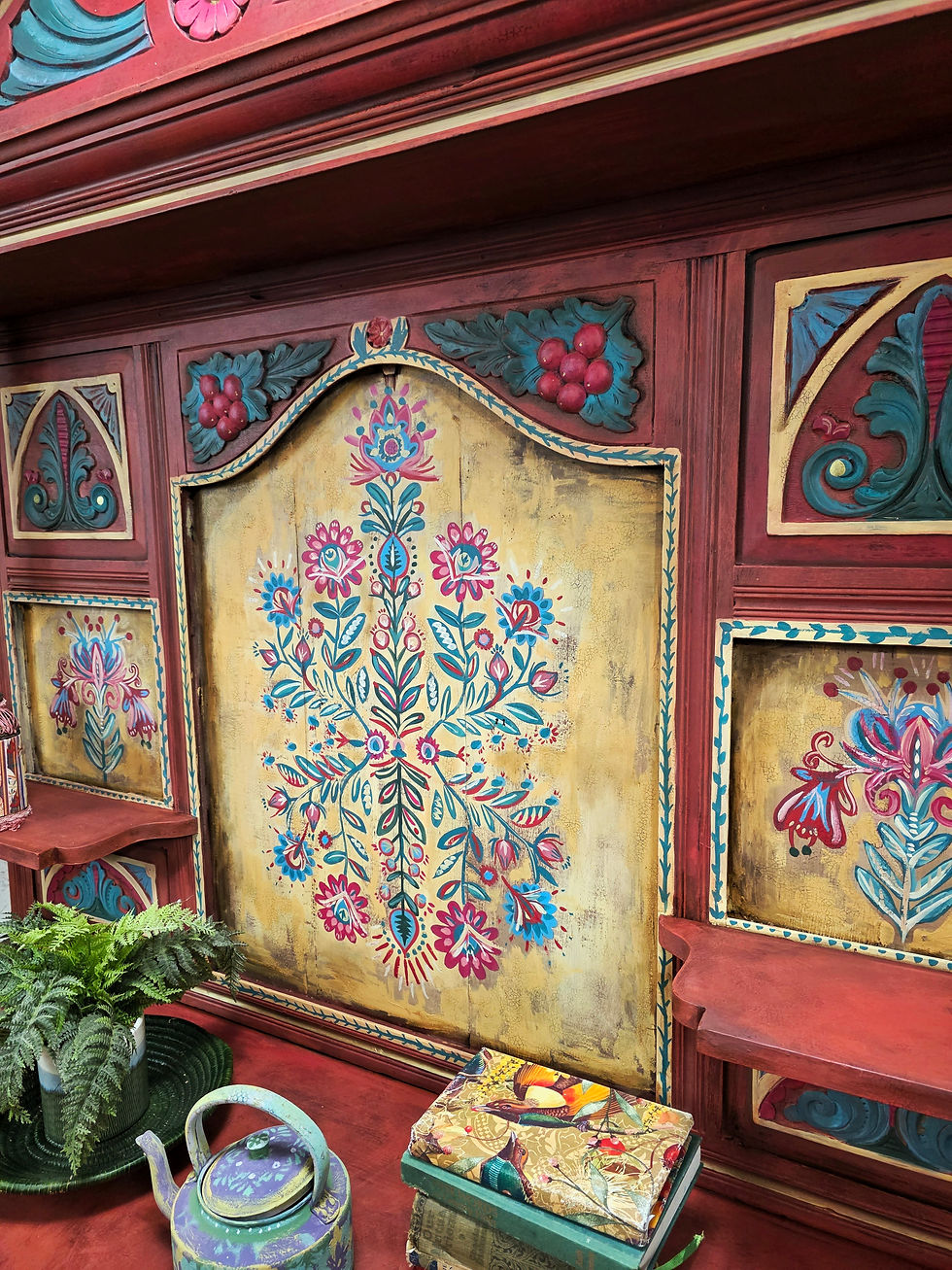
The way we approach decoupage is very much shaped by that history. Each piece starts with an existing item and is developed through preparation, design, and finishing into something new. The aim is not to cover or disguise the original, but to build on it in a way that feels intentional and lasting.
If you are interested in seeing how that translates into finished work, you can explore our pieces and materials here:
Love, Jayme ❤️


Comments